Most toolbox talks fail before they start. Supervisors scramble for content. Teams zone out. Paperwork gets lost. The result? Missed hazards, inconsistent training, and gaps in compliance.
But when structured, relevant, and easy to deliver, toolbox talks become one of the most powerful tools in safety leadership. The key? Access to ready-to-use, high-quality materials. That’s where toolbox talk free downloads come in.
These aren’t filler PDFs. The best ones combine regulatory alignment, visual clarity, and real-world relevance—so crews actually listen, retain, and act.
Let’s break down how to find and use these resources effectively, what to look for, and where to get them without sacrificing quality.
What Are Toolbox Talks (And Why They Matter More Than Ever)
Toolbox talks are short, focused safety meetings—usually 10 to 15 minutes—held at the job site before work begins. They address specific hazards, procedures, or behavioral topics relevant to the day’s tasks.
Unlike formal training sessions, they’re informal, interactive, and immediate. Their goal isn’t certification—it’s awareness.
Common Topics Include:
- Ladder safety
- PPE requirements
- Electrical hazards
- Fall protection
- Hot work permits
- Weather-related risks
- Equipment inspections
When done right, toolbox talks: - Reinforce safe behavior - Highlight site-specific risks - Encourage team discussion - Document safety efforts - Help meet OSHA and other compliance standards
But consistency is hard—especially without structure. That’s why free downloads have become essential for foremen, safety officers, and project managers.
The Real Value of Free Toolbox Talk Downloads
You might assume “free” means low quality. Not always. Many reputable safety organizations, government agencies, and industry groups offer free, professionally developed toolbox talk templates.
These resources save time, ensure compliance, and standardize messaging across teams.
Here’s What a Good Free Download Should Include:
- Clear objective – One focused safety topic
- Discussion points – Lead-in questions to engage workers
- Hazard identification – Specific risks tied to the topic
- Best practices – Actionable steps to mitigate risk
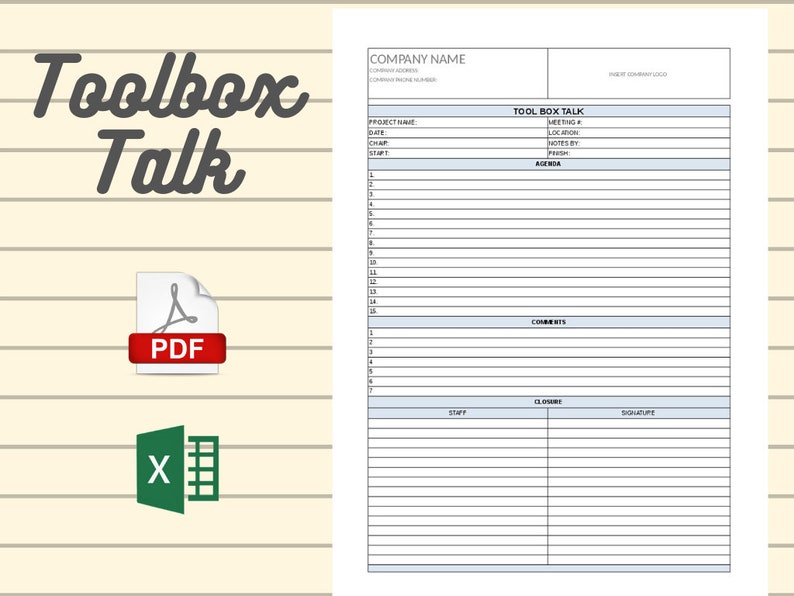
- Sign-in sheet – For attendance and documentation
- Visuals (if PDF) – Diagrams, icons, or photos to aid understanding
When you use a well-structured template, you eliminate guesswork. You show up prepared. And your team sees that safety isn’t an afterthought—it’s part of the plan.
Top 5 Sources for Reliable Toolbox Talk Free Downloads
Not all free resources are created equal. Some are outdated, overly generic, or lack documentation support. The best ones come from trusted sources with real-world safety experience.
Here are five top-tier providers offering genuinely useful free downloads:
| Source | Key Features | Download Format | Best For |
|---|---|---|---|
| OSHA.gov | Government-backed, OSHA-compliant, no fluff | PDF, sometimes editable | Regulatory alignment, formal audits |
| SafetyNow | Industry-specific talks (construction, manufacturing) | PDF with sign-in sheets | Field teams needing variety |
| SafetyCulture (iAuditor) | Modern templates, mobile-friendly, customizable | PDF & editable online | Digital documentation & tracking |
| HSE (UK) | Internationally recognized standards | PDF, topic-specific packs | Global operations or EU sites |
| Creative Safety Supply | Visual-heavy, clear language, multilingual options | PDF, some PPT | Teams with diverse language needs |
These aren’t random blog PDFs. They’re developed by safety professionals and regularly updated. Many include dual-language versions—a huge benefit for diverse crews.
Pro Tip: Always verify the publication date. A 2018 fall protection talk may not reflect current ANSI or OSHA updates.
How to Use Free Downloads Without Sounding Scripted
A common mistake? Reading the template word-for-word. That kills engagement.
Free downloads are a foundation—not a script.
Here’s how to adapt them:
- Personalize the intro – “Yesterday, I noticed three people not wearing high-vis near the crane. Let’s talk why that matters.”
- Use your own examples – “Last month at the West Site, a dropped wrench cracked a pipe. Could that happen here?”
- Pause for input – “What’s one near-miss you’ve seen this week related to this?”
- Link to today’s work – “We’re doing trenching—how does this apply?”
- Keep it short – Stick to 10–12 minutes. Respect their time.
The best toolbox talks feel conversational, not corporate. Use the download as your checklist, not your teleprompter.
Common Mistakes That Undermine Toolbox Talk Effectiveness
Free resources can’t fix bad delivery. Even the best PDF fails when used poorly.
Watch Out For:
- Repetition – Using the same topics every month (e.g., “PPE” every week)
- One-way delivery – Talking at, not with, the crew
- Wrong timing – Holding talks when people are rushing to start work
- No follow-up – Mentioning a hazard but not checking if controls are in place
- Poor documentation – Skipping sign-in sheets or losing records
One superintendent admitted: “We did toolbox talks every Monday, but I was just signing the sheets myself.” That’s not safety—it’s paperwork theater.
Real impact comes when talks are relevant, interactive, and tied to observable behavior.
Making Toolbox Talks Action-Oriented: A Real Example
Let’s say you download a free “Slip, Trip, and Fall Hazards” talk from SafetyCulture.
Here’s how to turn it into action:
- Review the template – Identify key points: housekeeping, footwear, weather conditions.
- Customize – Add: “We’ve had three slips near the mud pit—let’s address that.”
- Deliver – Start with: “Raise your hand if you’ve almost fallen this week. What happened?”
- Inspect – After the talk, walk the area with two crew members. Fix loose cables or pooling water.
- Document – Sign the sheet, post a photo in your safety log, and reference it in the next meeting.
Now it’s not just a talk—it’s a safety intervention.
Insight: The most effective talks end with a “safety win.” Example: “By clearing that walkway, we prevented a potential injury.”
Integrating Free Downloads Into Your Safety Workflow
Free PDFs are useless if they sit in a folder. Build a system:
Weekly Safety Prep Routine:
- Monday PM: Pull next week’s topics (use a 12-week rotating plan)
- Tuesday AM: Download and customize one talk (add site-specific risk)
- Wednesday AM: Deliver talk, collect sign-ins
- Thursday: File digitally (use Google Drive or safety software)
- Friday: Review one observation from the week linked to a past talk
This turns sporadic meetings into a continuous improvement loop.

Bonus: Some platforms like iAuditor let you assign talks, track completion, and generate reports—without extra cost.
Key Limitations of Free Toolbox Talk Resources
Free doesn’t mean perfect. Be aware of the gaps:
- Generic content – May not reflect your site’s unique hazards
- Outdated standards – Always verify against current OSHA or ANSI codes
- No tracking – Basic PDFs don’t auto-document or alert you to lapses
- Language barriers – Not all include Spanish or other common languages
- Design quality – Poor formatting reduces readability on mobile devices
To compensate: - Layer in your own risk assessments - Translate critical talks for non-English speakers - Pair downloads with visual aids (posters, short videos) - Audit your talk logs quarterly
Free is a starting point—not the entire strategy.
Where to Find the Best Quality Free Downloads (Without the Junk)
Avoid sites that gate PDFs behind email forms or push low-value content. Stick to proven sources:
Recommended Direct Links: - OSHA.gov Safety and Health Topics – Search “toolbox talk” in their publications - SafetyCulture Free Templates – Over 100 editable talks - HSE UK Toolbox Talks – Search “tool box talks” in their guidance section - Creative Safety Supply Library – Free downloads with visuals - SafetyNow Articles & Resources – Industry-specific PDFs
These require no login, no upsell, and no spam. Just click, download, and use.
Final Verdict: Use Free Downloads—But Make Them Yours
Toolbox talk free downloads are more than convenience tools. When selected and used wisely, they elevate safety culture, ensure compliance, and save lives.
But they’re not magic. Their value comes from consistent use, customization, and real engagement.
Don’t just hand out a PDF. Host a conversation. Address real risks. Document the effort.
Start with a free, high-quality template. Then make it your own.
Your crew doesn’t need perfection—they need presence. And that starts with showing up prepared.
Download. Customize. Deliver. Repeat.
FAQ
Where can I get toolbox talk free downloads in Spanish? Creative Safety Supply and OSHA.gov offer select talks in Spanish. You can also use SafetyCulture templates and translate them using certified tools or staff.
Are free toolbox talk downloads OSHA-compliant? Many are, especially those from OSHA, HSE, or SafetyCulture. Always verify the content matches current OSHA 29 CFR standards before use.
How often should I conduct toolbox talks? Weekly is ideal. At minimum, hold them before starting new tasks, after incidents, or when hazards change.
Can I edit free toolbox talk PDFs? Some are editable (look for .doc or fillable PDF versions). Others are static—scan and retype key points if customization is needed.
Do I need to document every toolbox talk? Yes. Attendance records protect your team and your company during audits or investigations. Always use a sign-in sheet.
What’s the best format for toolbox talks on site? Printed PDFs work, but mobile-friendly formats (like iAuditor) allow real-time documentation and photo attachment.
How long should a toolbox talk last? Keep it between 10 and 15 minutes. Focus on one topic, encourage discussion, and end with a clear takeaway.
FAQ
What should you look for in Toolbox Talk Free Downloads for Safer Workplaces? Focus on relevance, practical value, and how well the solution matches real user intent.
Is Toolbox Talk Free Downloads for Safer Workplaces suitable for beginners? That depends on the workflow, but a clear step-by-step approach usually makes it easier to start.
How do you compare options around Toolbox Talk Free Downloads for Safer Workplaces? Compare features, trust signals, limitations, pricing, and ease of implementation.
What mistakes should you avoid? Avoid generic choices, weak validation, and decisions based only on marketing claims.
What is the next best step? Shortlist the most relevant options, validate them quickly, and refine from real-world results.